-
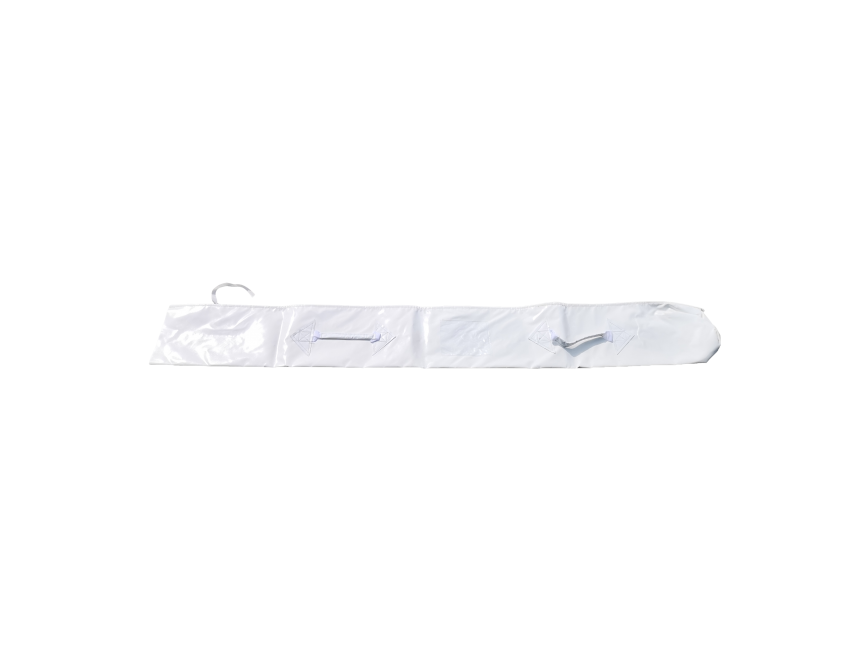
Small Pagoda Tube Carrying Case
€ 35,70 excl. VAT - € 43,20 including taxCarrying Bag for Short Poles of a Pagoda Tent
This sturdy carrying bag is specially designed for storing and transporting the smaller, shorter poles of pagoda tents.
Thanks to the durable material and reinforced handles, the poles remain well protected and the bag is easy to carry. -
Mounting plate for the piping on the side panel of a pagoda
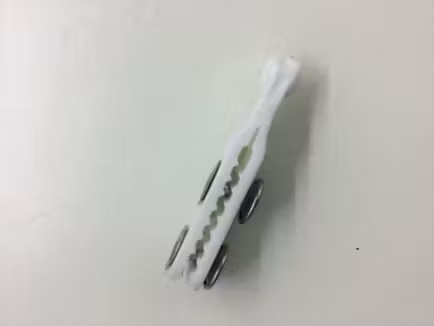
€ 4,30 excl. VAT - € 5,20 including taxMounting bracket for pagoda tent side panel
This mounting bracket is an essential component of the side walls of a pagoda tent.
Multiple brackets are attached to the top of each side wall and then slide into the channel rail of the horizontal tubes.
This allows the side wall to be securely, tightly, and completely waterproof and windproof attached to the frame. -
Pagod Tent: Locking Pin for Central Pole
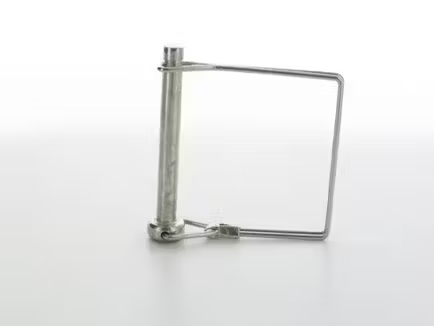
€ 8,10 excl. VAT - € 9,80 including taxLocking Pin for Central Pole – Pagoda Tent
The locking pin is located at the bottom of the pagoda tent’s central pole and plays a key role in ensuring proper and stable assembly. Once the central pole is centered on the cross cables, the locking pin is secured underneath the cross cables. -
Pagodetent Bolt for central mast
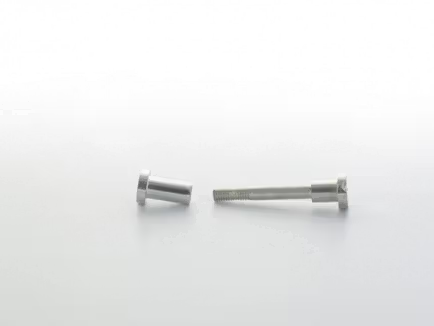
€ 8,10 excl. VAT - € 9,80 including taxBolt for Plastic Slider – Central Pole
Pagoda Tent This bolt is a replacement part for the plastic slider located on the central pole of the pagoda tent. The bolt ensures that the slider remains securely fastened and can move smoothly along the pole while setting up and tensioning the roof fabric. -
Central pole for pagoda tents: 3x3m, 4x4m, 5x5m, 6x6m
Price range: €96,60 to €118,90Central pole for pagoda tent
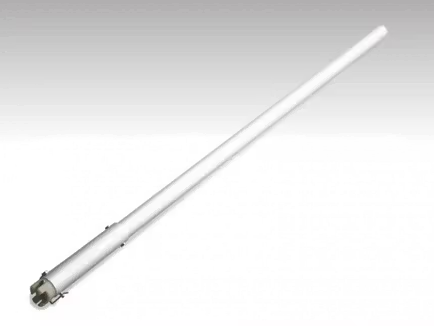
The central pole ensures that the pagoda tent’s roof fabric is perfectly tensioned.
This component forms the highest point of the structure and ensures that the roof remains taut and stable, even during prolonged use.
This central pole is essential for the proper and durable setup of any pagoda tent. -
Pagod Tent Ground Pipe Set 3x3m–4x4m–5x5m–6x6m
Price range: €113,70 to €178,40Ground Pole Set for Pagoda Tent – 3 × 3 m, 4 × 4 m, 5 × 5 m, 6 × 6 m
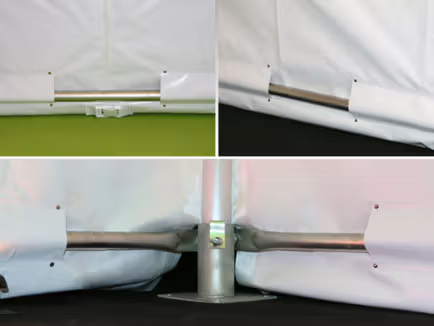
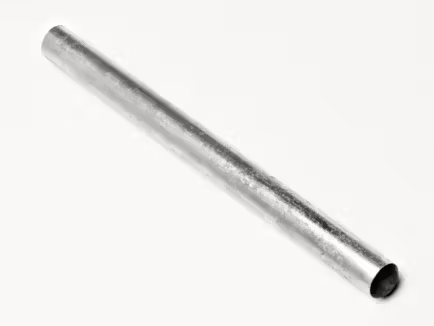
This complete ground pole set consists of 8 sturdy poles that are slid through the slits at the bottom of the tent canopy and then attached to the legs of the pagoda tent.
The poles prevent the side walls from blowing inward and significantly increase the stability of the entire structure.
This ground pole set ensures a sturdier, wind-resistant, and more professional setup for your pagoda tent. -
Pagoda Tent Pagoda Corner Piece
€ 71,10 excl. VAT - € 86,03 including taxCorner Bracket for Pagoda Tent
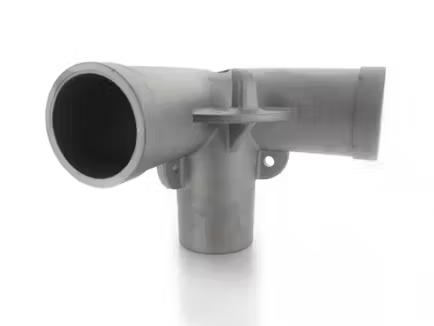
This corner bracket is an essential component of a pagoda tent’s structure.
It is used to securely connect the horizontal tubes to each other and to attach them to the vertical tubes.
This sturdy corner bracket creates a stable and reliable roof and wall frame, contributing to the overall strength of the pagoda structure -
Pagod tent keder horizontal tube No. 1 for 3x3m
€ 178,20 excl. VAT - € 215,62 including taxHorizontal Pole – Pagoda Tent 3 × 3 m
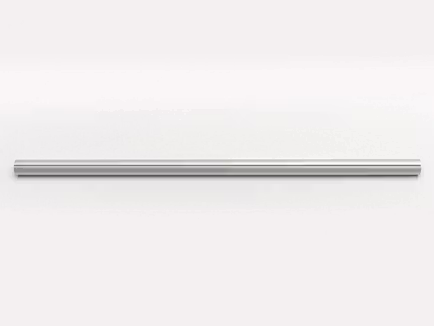
The 3 × 3 m pagoda tent features four 3-meter horizontal tubes, each made from a single piece.
These tubes form the entire roof structure of the tent and also serve as guides for the side walls, which are slid into the profiles using piping. -
Pagod tent keder horizontal tube No. 1 for 4x4m
€ 99,60 excl. VAT - € 120,52 including tax177 cm Horizontal Tube – 4 × 4 m Pagoda Tent
This 177 cm horizontal tube is a component of the roof structure of a 4 × 4 meter pagoda tent.
Together with a second identical tube, this tube forms a single complete horizontal support beam of the roof frame, into which the side walls are also slid.
Both tubes are securely connected to each other with a coupling piece. -
Pagoda Tent: Keder for Horizontal Tube No. 2
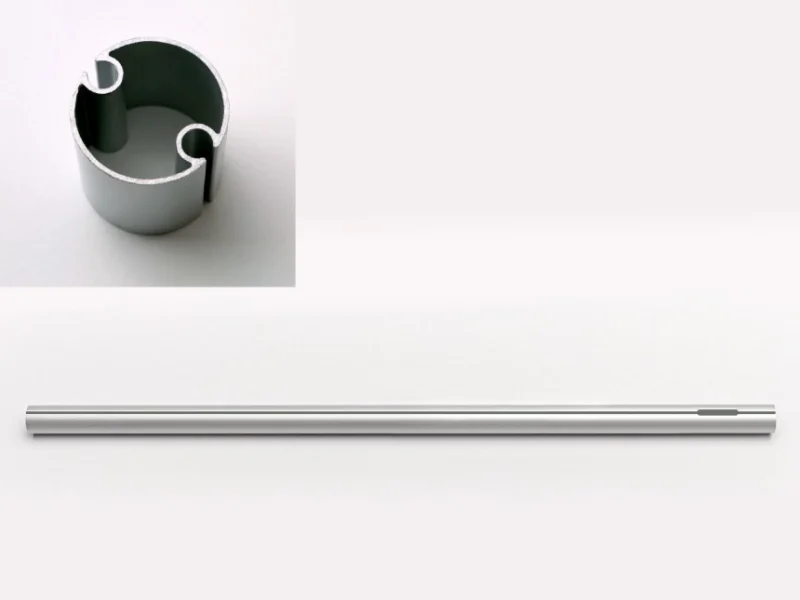
€ 116,40 excl. VAT - € 140,84 including taxThe pagoda tent is equipped with 4 vertical poles.
The same vertical poles are used for all sizes (3 x 3 m, 4 x 4 m, 5 x 5 m, and 6 x 6 m).The vertical tubes are mounted under the roof frame.
Important: Always install the vertical tubes with the piping slot facing upward.
The piping slots at the bottom must be positioned at a 45° angle relative to the side walls.
This ensures proper installation of the piping side walls and an optimal fit. -
Pagod tent keder horizontal tube No. 1 for 5x5m
€ 125,70 excl. VAT - € 152,10 including taxHorizontal Tubes – 5 × 5 m Pagoda Tent
The 5 × 5 m pagoda tent features 8 horizontal tubes, each 227 cm long and made from a single piece.
These tubes form the roof structure and feature the channel profile into which the side walls are slid for a wind- and watertight finish.
To assemble one complete horizontal tube, you need two 227 cm tubes.
You can easily connect these using a connector (not included). -
Pagodetent horizontal tube No. 1 for 6x6m
€ 183,40 excl. VAT - € 221,91 including taxHorizontal Tube – 6 × 6 m Pagoda Tent
This 282 cm horizontal tube is used in the roof frame of a 6 × 6 meter pagoda tent.
The tube forms part of the roof structure into which the side walls are slid for a completely wind- and watertight seal.
One complete horizontal tube requires two 282 cm tubes, which are connected to each other with a coupling. -
Cross cable for 3x3m pagoda tent (1 piece)
€ 37,20 excl. VAT - € 45,01 including taxCross Cable for Pagoda Tent
A pagoda tent features two cross cables that are attached diagonally to the roof frame.
These cables increase the sturdiness of the entire roof frame and ensure that the weight and tension of the roof fabric are distributed optimally.
The tent’s central pole rests at the intersection of these two cables, keeping it exactly in the center and ensuring the structure remains stable.
This item includes one cross cable. -
Pagod tent cross cable for 4x4m (1 piece)
€ 40,60 excl. VAT - € 49,13 including taxCross Cable for Pagoda Tent
A pagoda tent features two cross cables that are attached diagonally to the roof frame.
These cables increase the sturdiness of the entire roof frame and ensure that the weight and tension of the roof fabric are distributed optimally.
The tent’s central pole rests at the intersection of these two cables, keeping it exactly in the center and ensuring the structure remains stable.
This item includes one cross cable. -
Pagod tent cross cable for 5x5m (1 piece)
€ 52,90 excl. VAT - € 64,01 including taxCross Cable for Pagoda Tent
A pagoda tent features two cross cables that are attached diagonally to the roof frame.
These cables increase the sturdiness of the entire roof frame and ensure that the weight and tension of the roof fabric are distributed optimally.
The tent’s central pole rests at the intersection of these two cables, keeping it exactly in the center and ensuring the structure remains stable.
This item includes one cross cable. -
Pagodetent cross cable for 6x6m (1 piece)
€ 50,50 excl. VAT - € 61,11 including taxCross Cable for Pagoda Tent
A pagoda tent features two cross cables that are attached diagonally to the roof frame.
These cables increase the sturdiness of the entire roof frame and ensure that the weight and tension of the roof fabric are distributed optimally.
The tent’s central pole rests at the intersection of these two cables, keeping it exactly in the center and ensuring the structure remains stable.
This item includes one cross cable. -
Pagod Tent Plastic Slider for Central Pole
€ 20,50 excl. VAT - € 24,81 including taxPlastic Slider for Center Pole – Pagoda Tent
This plastic slider is part of the center pole of a pagoda tent and ensures that the pole slides smoothly and without friction over the cross cables during assembly.
It prevents damage to both the pole and the cables and ensures that the center pole is positioned correctly. -
Pagoda Tent Pagoda Flag Holder
€ 17,20 excl. VAT - € 20,81 including taxFlag Holder Tube for Pagoda Tent – Exterior Mounting on the Central Pole
This tube is attached to the outside of the central pole of a pagoda tent and serves as a holder for securely and safely mounting a flag. The component simply slides over the pole, providing a stable base for various types of flags.

Frame Parts


1
2

This website uses cookies to improve your experience. By using this website, you agree to our Data Protection Policy.
Read more